| |
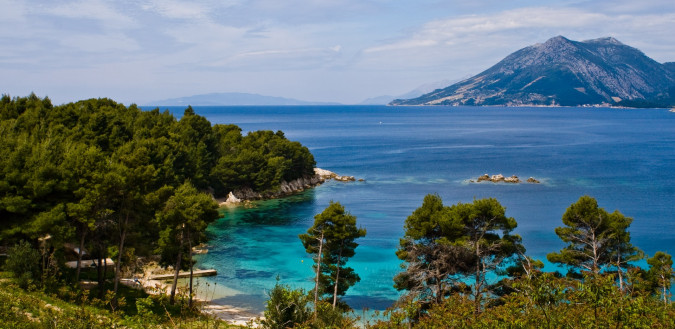
| In the immediate vicinity of a small village Žuljana
there is a beautiful beach made of sand and small stones. The place is
ideal for children because the cove is shallow and sandy. One side of
the cove ends in a small harbour. Despite of that the water is crystal
clear. At the village entrance there is a shower, and in the place
itself there is a small shop where you can find everything you need for
a picnic on the beach. Besides that there are also three caffebars,
grills and a scuba-diving base. |
|
|
| To get to Žuljana you follow the main road .
If you are coming from the direction of Ston in Dubrava you turn left. A
serpentine road goes through the valley and into the cove. If you go
through the village of Žuljana and follow the road further, you will
come to two beautiful pebble beach coves. |
|
|
| This boat will take You to your scuba-diving
destination, a few caves in which you can dive without risk, and one
very interesting cave with a stone stalactites. |
 |
6 wrecks:
1 torpedoboat S57,
2 supply ships,
1 cargo ship,
1 ponton,
1 fishing boat.
The wrecks are at a depth from 15 to 38m.
|
|
| |
| Korčula, a historic center of the
island, has a beautiful position on the Pelješac channel, a lot of
monuments of architecture and culture, a rich tradition of seamanship,
shipbuilding and stonemasoning. The birthplace of a famous seaman Marko
Polo; today a significant tourist center. Tourism has a long tradition
on this island. In 1912 a first modern hotel was opened «Korčula» (the
building dates from the year 1871). For decades now the guests from the
hotel terrace enjoy the sunset, which is especially beautiful in spring. |
|
From the port, to the old city leads an old baroque stairway (1907).
On the city square there is the St. Marks cathedral (all that is
left from the original cathedral from 14 st. are three stone arcs).
The building of the cathedral was finished by the end of the 15th
century in a style that crosses from gothic to renaissance. Amongst
the first builders was Bonino from Milano (the main portal from
1412); Hranić Dragošević, Ratko Ivanić and Marko Andrijić (bell
tower). Opposite of the cathedral is the Arneri palace built in the
late gohtic style, with beautiful renaissance court. Right next to
it is the Gabrielis renaissance palace (16th century) in which in
1957. was opened the city museum, who's exhibits document the old
trades of Korčula as shipbuilding, seamanship and stonemasoning
(gallery with works of native artists). From the old city of Korčula
leads the «Kopnena vrata» (Land gates) (1650) below Revelin,
monumental eight-sided tower (1493-96), from where it goes onward
towards the bridge, and then goes on to the ruins of the old city
walls. |
Nearby, on St. Nikolas cape, in 1969. in a small summer house was
set up the Memorial museum of Maksimilijan Vanka (1889-1963), with
the artist's pictures, drawings and documents. From the suburbs in
front of «Kopnena vrata» the trail leads of to Hober park, and to
the fortress of St. Vlaho (Fort Wellington) which was built by the
British, on the hill near the town. In the suburbs, at the village
Biline, there is a classicist, eight-sided church of St. Justin. |
| |
MLJET, is an island in south Dalmatia, south of peninsula
Pelješac, between them is the Mljet channel( 100,4 km2; 1237
inhabitants). The scenery of the island mark chains of hills with many
Karst vallys and fields: Polačno polje, Ivanovo polje, Blatsko polje,
Kneže polje. The wides is Babino polje which streches south of the
lagest hill(Veli grad, 514 m). On the most distant north-western part of
the island lays the valley with two lakes: Veliko jezero and Malo jezero
(the Big and the Small lake). Malo jezero (24 ha, depth 29,5 m) is
linked with a 30 m long channel to the Veliko jezero. Veliko jezero (145
ha, depth 46 m) is linked with a shallow, app. 30 m long channel to the
sea. The current in the channels is very strong, and it changes
direction every six hours with the tides. This stong current was once
used to power water-mills. In inland there are four Karst lakes, which
the locals call «blatina» and «slatina» . The names of the larger bays
are: Pomena, Polače, Tatinica, Sobra, Luka Prožura, Okuklje, Saplunara.
In front of the coast there are many small islands. |
|
|
National park Mljet (from 1960) is located on
the north-western part of the island; 54 km2. The Park includes
Veliko and Malo jezero (the Big and the Small lake), and the
channel. The lakes are linked one with another and with the sea with
a narrow and shallow, artificially made channel. The national park
has many plant species: Alep pine (Pinus halepensis) and Lužnjak oak
(Quercus ileks) with dense low-bushes. In the woods you can find the
mungose; and the south coast is the habitat of the sea-bear. In the
south cove of the Veliko jezero there is app. 200 m long and about
120 m wide island on which the monks of St. Benedict built in 12th
century the monastary with the church of St. Mary with romanic
signatures. The lobby with the picture of saints was built somewhere
in between the 12th and 13th century. In front of it is a
renaissance portrait with the coat of arms of the Gundulić family
from 16/17th century. At that time the four-sided defensive tower
was also built. On the north-eastern side of the church there is a
romanic bell tower. The two side chappels with altars were added in
baroque. The old monastery building with the large basement was
expanded in the 16th century toward the sea with a renaissance
building and a terrace 30 m long on the front side. In that time the
monastery was also fortified (defensive walls and towers on the
south side). In 1869. the monastery was disbanded; and until 1941.
it served as the foresters administration building of the island
Mljet; In 1959.-60. it was turned into a hotel. Recently the church
was reopened but the monastery is still closed. In St. Benedicts
monastery the monks were also very famous writters from Dubrovnik:
Mavro Vetranović (1482-1576), Mavro Orbini (died 1614.) and Ignjat
Đurđević (1675-1737), who described his life on Mljet in one of his
songs. |
|
National park Mljet is a natural phenomena and because of its
beauty, geological, biological and cultural significance has the highest
protection, and so it represents one of the most attractive islands of
the Adriatic. The island is also known for its wildlife. On it live
deer, wild boars and in purpose of exterminating poisonous snakes in
1910. the people brought the mungos. There are many legends about the
island, in fact one of them even says that the Roman emperor August had
visited it. Exquisite home cooking (fish, lobster, cheese, vine),
beautiful scenery and traditional songs make staying on Mljet a «dream
vacation». Harbours Polača and Pomena are traditional yahtsman
destinations. |
| |
|
Dubrovnik is called «the jewel of the
Adriatic» and rightly so. At the hight of its power Dubrovnik was
one of the most significant trade and cultural centers of the
Mediteranium. Today the center of the old city is shown to all
visitors as a unique museum in the open, with many sights. UNESCO
has enlisted Dubrovnik with its authentic old city center on its
list of historical and natural world heritage. Dubrovnik has many
traditions. Its cultural program in the fall is international with
many famous names attending but also open to anyone. The average of
220 sunny days per year makes the long evening strolls amongst the
gardens and restaurants a pleasure you won't soon forget. Dubrovnik
summer games are also a cultural event of great importance with many
world famous musicians, actors and artists attending. It is the most
significant cultural event in Croatia. In summer the whole old city
core turns into this great outdoor stage. |
  |
|
This small city-state, Republic of Dubrovnik has
already in the middle ages represented the largest naval force of
the Mediteranium. The people of Dubrovnik have through the centuries
kept the ballance between the city and the natural beauties and the
crystal clear sea at its gates. This has made Dubrovnik a true
magnet for tourists. Thanks to its geografical position Dubrovnik
has mediteranium climate with mild and rainy winters and hot and dry
summers. Around Dubrovnik are small fishing villages and Elafit
islands under the towns supervision, of which only the largest –
Šipan, Lopud and Koločep – are inhabited. The combination of nature,
great sights and cultural events make Dubrovnik one of the best
destinations of the Mediteranium for which Bernard Shaw said: »Who
wants to see heaven on earth has to come to Dubrovnik.» |
| |
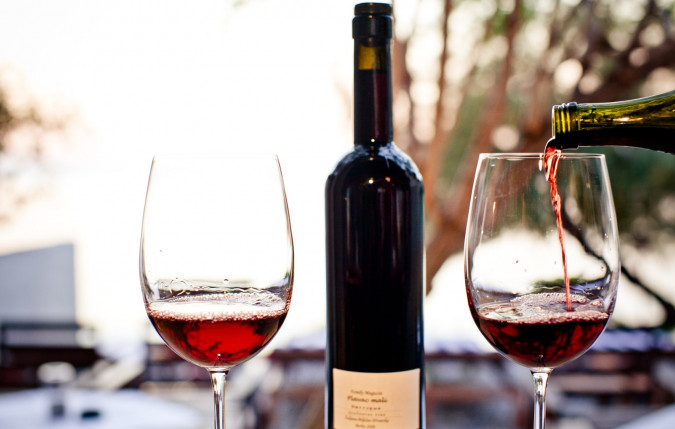
This quality dry red wine (Highest quality wine) of
controlled origin comes from peninsula Pelješac which is 100 km
north-west from Dubrovnik. This wine won the gold medal in 1910. on
the Paris wine exhibit. The region around the village Potomje on the
south-western side of the peninsula near the coast, has around 3.000
sunny hours per year. The name, Potomje was internationally
protected in 1961. Dingač is made from semi-dry grapes of the wine
sort Plavac Mali. This oily wine the color of rubies has between 13
and 15% of alcohol. It is one of the top quality red wines... |
 |
Pelješac is the region of wines, olives and hills – and hyena
which you can sometimes hear at night. On the south-eastern part
Pelješac is connected to mainland, and the north-western part comes very
close to Korčula. In between are hills, bays and valleys. South coast is
covered in vineyards. Pelješac is known as the center of high quality
red wine
Historically Pelješac was always divided . While the
most western part belonged to Korčula and with it toVenice, the most
of peninsula belonged to Ragusa, today Dubrovnik. The first habitats
date from Iliric times and Romans and Greeks have also left their
mark on Pelješac which can today be seen in museums of Orebić, Ston
and Dubrovnik. |
| |
Ston
The city lies on the south part of the peninsula. Ston has the longest
defensive walls in Europa. The city was founded by Ragusa, and it was
one of the seven districts of Adriatic Republic. The walls and the fort
date from 14th century. Ston was built by a strict agenda.
The sightseeing is best started at the fort. It is
there you will find the church of St.Vlaho, which was badly damaged
in the last quake in 1996. On the city square there are many
cafe-bars that call for some time off. On the left side of the
square dominates the Rektor palace in the shape of the letter U.
Right in front of You is the bishop's office. |
|
Salt, right after sea trade, was the second source
of income for Ragusa. In the district of Ston there are still
saltworks. The walls protected this gold mine of Dubrovnik nobles.
Salt made Ston rich and known, and very respectable town.
|
|
The walls were rebuilt after the quake, so now you can
explore them. From the highest point of the fort there is a beautiful
view of Ston and the saltworks. On the other end of the walls is a
monastery with St. Nikola's church. In Ston there are two supermarkets,
bakeries, buchers, banks and a post-office among other things.
Mali Ston
Mali Ston (Small Ston), which is on the side of the peninsula that
overlooks the mainland, is just one hill away from Ston. Mali Ston is
famous for shell-growing. It is there that the fort of Ston ends. High
above the town is the Koruna fort which was once a poweful fort. The
blueprints of Mali Ston can be found in Dubrovnik, and are considered
one of the oldest arhitect projects in Europa.
|
|
Startpage |
|
|